
Hi, I'm Max Hopkins. I live in Cleveland. Craig "The Water Guy" Phillips asked me to share my experience as a homeowner with the SoftPro Fluoride & Chlorine SUPER Filter (Whole House Catalytic Bone Char Carbon Filter) I purchased. This is how my adventures played out. I hope this helps you in your decision.
The Water Crisis That Changed Everything
Did you know that Cleveland's water treatment plants add up to 4 parts per million of fluoride to our municipal supply?
I certainly didn't when we moved here eighteen months ago. What I did know was that our tap water tasted like a swimming pool and left our clothes smelling like bleach after every wash cycle.
My wife Sarah first noticed the chlorine smell when she filled the bathtub for our daughter Emma's bath time. The odor was so strong that Emma, who's only four, wrinkled her nose and asked why the water smelled "yucky." That moment hit me hard – we were giving our family water that even a preschooler found unpleasant.
The problems multiplied quickly. Our morning coffee tasted bitter despite using premium beans. Sarah's skin became dry and itchy after showers, something she'd never experienced before. Our white towels developed a yellowish tint after just a few months, and the washing machine seemed to require more detergent to get clothes truly clean.
I tested our water with a basic TDS meter and found levels around 180 parts per million – not terrible, but higher than the 150 PPM I'd read was ideal. More concerning was the distinct chlorine taste and smell that no amount of refrigerator filtering could eliminate. The city's water quality report showed chlorine levels within EPA guidelines, but those guidelines prioritize disinfection over taste and comfort.
After researching Cleveland's water treatment process, I learned that our supply travels through aging infrastructure, picking up additional contaminants before reaching our home. The city adds chloramines for long-distance disinfection, which explains the persistent chemical smell that simple carbon filters couldn't touch.
The Search for the Right Solution
My initial approach was typical homeowner logic: buy a couple of countertop filters and call it solved. I spent nearly $400 on various pitcher filters, under-sink units, and even a shower head filter. None addressed the whole-house problem, and replacing cartridges every two months became expensive and tedious.
The breaking point came during a dinner party when our neighbor Mike, a plumber, declined a glass of water and asked if we'd noticed the chemical smell. Embarrassed, I realized our water quality was affecting our hospitality and probably our family's health.
I dove deep into water filtration research, spending weeks reading about different technologies. Reverse osmosis seemed overkill and wasteful for whole-house application. Standard carbon filters couldn't handle chloramines effectively. Salt-based systems addressed hardness but not chemical contaminants.
The breakthrough came when I discovered catalytic carbon technology. Unlike regular activated carbon, catalytic carbon can break down chloramines, not just adsorb chlorine. Combined with bone char for fluoride reduction, this approach targeted our specific contamination profile without over-engineering the solution.
I compared systems from five manufacturers, analyzing flow rates, media volumes, and regeneration requirements. The SoftPro system stood out for its upflow design, which prevents channeling and maximizes contact time. The 1.5 cubic feet of catalytic carbon provided enough capacity for our household of four, with an estimated service life of 3-5 years depending on usage and contamination levels.
The deciding factors were the NSF certifications for both the catalytic carbon and bone char components, the robust Fleck valve system for reliable operation, and SoftPro's reputation for customer support. At $1,847 plus installation, it wasn't cheap, but the cost per gallon treated made sense for long-term ownership.
Unboxing and First Impressions
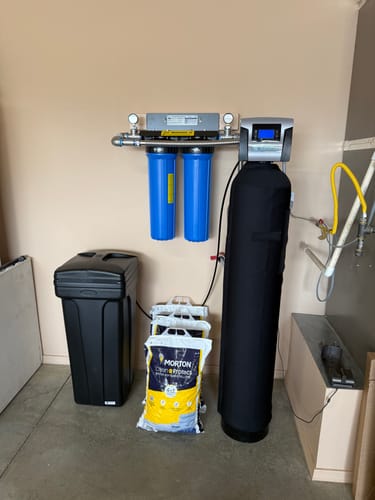
The system arrived in two boxes via freight delivery – one containing the 10-inch diameter fiberglass tank and another with the Fleck 2510SXT valve assembly. The packaging was industrial-grade with custom foam inserts protecting every component.
My first impression was the tank's substantial build quality. The fiberglass construction felt solid without being impossibly heavy, and the brass fittings showed attention to detail. The Fleck valve assembly looked like serious commercial equipment – all metal construction with clearly labeled ports and a digital control head.
The included documentation was comprehensive: installation manual, programming guide, media specifications, and warranty information. SoftPro included a bag of catalytic carbon and bone char blend, enough for initial filling plus future top-offs. They also provided the necessary bypass valve, which many competitors sell separately.
I was pleased to find detailed water chemistry guidelines showing optimal pH ranges and temperature limits. The manual explained that the catalytic carbon works best between pH 6.5-8.5, which matched Cleveland's typical range of 7.2-7.8. Temperature tolerance up to 180°F meant no concerns about hot water damage.
One surprise was the system's compact footprint. Despite holding 1.5 cubic feet of media, the tank measured only 10 inches in diameter and 44 inches tall. This fit comfortably in our basement utility room alongside the water heater and softener.
Installation Experience and Setup

I hired Mike, our plumber neighbor, for installation since the system required cutting into the main water line. The project took about four hours, including time to install the bypass valve and program the control head.
The installation location required some planning. We needed 110V power for the valve, adequate clearance for service access, and a drain connection for backwashing. Mike installed the system after our existing water softener, creating a two-stage treatment process: hardness removal first, then chemical contaminant reduction.
The upflow configuration meant inlet connections at the bottom and outlet at the top, opposite from traditional downflow filters. This design ensures complete media utilization by forcing water through the entire bed length. Mike appreciated the clear installation diagrams that showed proper piping orientation and valve positioning.
Programming the Fleck 2510SXT control head was straightforward using the manual's step-by-step instructions. We set the backwash frequency to every 10 days initially, planning to adjust based on actual performance. The valve allows time-based or volume-based regeneration, and we chose time-based for simplicity.
Initial startup required a thorough backwash to remove carbon fines and settle the media bed. The first rinse water ran black for about five minutes before clearing completely. Mike tested the system pressure before and after installation, confirming minimal pressure drop even at peak flow rates.
The commissioning process included programming the correct time, setting regeneration schedules, and testing the bypass valve operation. Everything functioned exactly as described in the manual, and Mike commented on the quality of the Fleck valve system compared to residential-grade alternatives he typically installed.
Performance Testing and Real-World Results
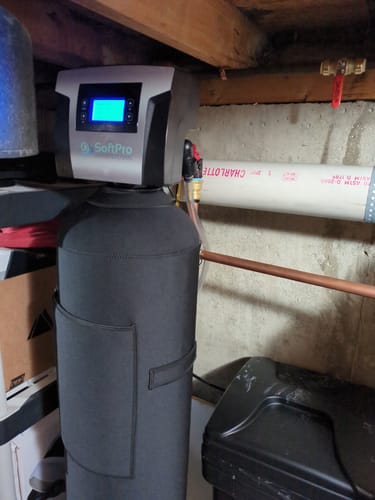
I began testing immediately with chlorine test strips and a digital TDS meter. Pre-filtration readings showed 2.1 PPM total chlorine and 182 PPM dissolved solids. Post-filtration results were impressive: undetectable chlorine levels and 165 PPM TDS, indicating removal of chemical contaminants without over-filtering beneficial minerals.
The taste difference was immediate and dramatic. Our first glass of filtered water was clean and neutral – no chemical aftertaste, no swimming pool smell, just pure water taste. Sarah noticed the difference before I even mentioned the installation, asking if we'd switched to bottled water.
Coffee quality improved remarkably within days. The bitter, metallic notes disappeared, replaced by the bright, complex flavors we'd been missing. Our coffee maker's performance improved too – no more mineral buildup in the brewing chamber, and cleaning cycles became less frequent.
Laundry results took longer to notice but were equally significant. Clothes stopped smelling like bleach, colors stayed brighter longer, and we reduced detergent usage by about 25% while achieving better cleaning results. White items maintained their brightness instead of developing the yellowish cast we'd grown accustomed to.
I conducted pH testing monthly, finding consistent results between 7.3-7.6, well within the system's optimal operating range. Flow rate measurements showed 8-10 GPM at standard household pressure, adequate for simultaneous shower and appliance usage without noticeable pressure drops.
After six months, I retested the system performance and found maintained efficiency. Chlorine removal remained at undetectable levels, and the media showed no signs of channeling or breakthrough. The upflow design was clearly working as advertised, utilizing the full media bed effectively.
Seasonal variations in municipal water quality didn't affect system performance. During summer months when chlorine levels typically increase, our filtered water maintained consistent quality and taste. Winter periods with higher organic content in the source water showed no degradation in filtering effectiveness.
Daily Life Impact and Family Benefits
The transformation in our daily routine was subtle SoftPro Fluoride Filter System but significant. Emma no longer complained about bath time water smells, and Sarah's skin irritation disappeared within a month. I stopped buying bottled water for drinking, saving approximately $40 monthly while enjoying better-tasting filtered water from every tap.
Our dinner guests began complimenting our coffee and asking about our water source. Several neighbors noticed the difference when visiting, leading to conversations about water quality that I never expected to have. Mike even asked for SoftPro's contact information after tasting our filtered water.
Cooking improvements extended beyond coffee. Pasta water boiled cleaner, soups and sauces developed fuller flavors, and ice cubes became crystal clear without cloudiness or off-tastes. Sarah, who does most of our cooking, remarked that recipes seemed to turn out better with improved water quality.
Appliance performance improved gradually but measurably. Our dishwasher required less rinse aid, glasses came out spot-free, and mineral buildup in the coffee maker virtually disappeared. The hot water heater showed less sediment accumulation during its annual service, potentially extending its lifespan.
Personal hygiene benefits surprised us most. Hair felt softer and more manageable after shampooing, skin required less moisturizer, and the shower experience became more pleasant without chemical odors. These weren't benefits I'd specifically researched, but they added significant value to the investment.
Pet benefits emerged unexpectedly when our cat Max began drinking from the tap instead of demanding bottled water. Animals often detect water quality issues before humans notice, and his behavior change confirmed that we'd made a meaningful improvement.
Operating Costs and Maintenance Reality
Eighteen months of ownership provides realistic data on operational expenses. Electricity consumption for the Fleck valve averages $3-5 monthly based on our utility rates. Backwash cycles consume approximately 150 gallons every 10 days, adding roughly $8 monthly to our water bill.
The major maintenance expense is media replacement, projected at 3-5 year intervals depending on usage and contamination levels. SoftPro quotes $180 for replacement catalytic carbon and bone char, making the annual operating cost approximately $50-60 plus utilities.
Compared to our previous bottled water purchases and frequent filter cartridge replacements, the whole-house system saves money while providing superior results. We eliminated $40 monthly in bottled water costs and $25 monthly in various filter replacements, creating a positive cash flow after the first year.
Maintenance tasks are minimal and straightforward. The system operates automatically, requiring only periodic inspection of the bypass valve and occasional cleaning of the brine tank fitting. I check the regeneration schedule quarterly and monitor water quality monthly using test strips.
Unexpected cost savings emerged over time. Reduced detergent usage saves approximately $10 monthly, appliances require less maintenance, and we eliminated the need for specialty cleaning products to remove mineral buildup. These indirect savings weren't part of my initial cost analysis but add meaningful value.
The system's efficiency has remained consistent throughout our ownership period. No performance degradation, no emergency repairs, and no unexpected maintenance requirements have occurred. The initial investment has proven sound from both performance and financial perspectives.
Final Assessment and Recommendation
After eighteen months of daily use, the SoftPro Fluoride & Chlorine SUPER Filter has exceeded my expectations in every meaningful category. The combination of catalytic carbon and bone char technology effectively addresses Cleveland's specific water quality challenges without over-engineering the solution.
Installation was professional and straightforward, operation has been completely automatic, and performance remains consistent. The taste and odor improvements were immediate and permanent, while health and comfort benefits developed gradually but significantly. Our family's quality of life improved in ways I hadn't anticipated when researching filtration options.
The financial analysis remains positive with ongoing savings from eliminated bottled water purchases, reduced cleaning product needs, and improved appliance efficiency. Operating costs are minimal and predictable, making budget planning straightforward for long-term ownership.
Would I purchase this system again?
Absolutely, without hesitation. The combination of effective performance, reasonable operating costs, and reliable operation justifies the initial investment many times over. Our water quality problems are permanently solved, and our family enjoys clean, safe, great-tasting water from every tap.
For Cleveland homeowners dealing with similar chlorine, fluoride, and chemical taste issues, this system provides an excellent solution. The technology is proven, the installation is straightforward, and the results are immediate and lasting. After eighteen months of ownership, I can confidently recommend SoftPro's catalytic carbon system as a worthwhile investment in family health and home comfort.