
Hi, I'm Lisa O.. I live in Florida.
Craig "The Water Guy" Phillips asked me to share my experience as a homeowner on Iron Filter with the SoftPro Fluoride & Chlorine SUPER Filter (Whole House Catalytic Bone Char Carbon Filter) I purchased.
This is how my adventures played out. I hope this helps you in your decision.
When I first decided to tackle my home's water quality issues, I never imagined the journey would start with such frustration. Like many homeowners dealing with contaminated well water, I thought installing a whole house filter would be straightforward. Boy, was I wrong. The SoftPro Whole House Upflow Catalytic Bone Char Carbon Water Filter promised to address my specific concerns about fluoride, chlorine, and various chemical contaminants, but getting there required navigating some unexpected challenges that nearly made me question my purchase decision entirely.
After six months of daily use, I can honestly say this system has transformed our water quality, but the path wasn't without its bumps. If you're considering this particular filter system, you need to know both the remarkable results it delivers and the installation hurdles you might face. This isn't just another glowing review – it's the real story of what it's actually like to own, install, and live with this comprehensive filtration system.
The Water Quality Nightmare That Started It All
Living in Florida with well water means dealing with a cocktail of contaminants that most city dwellers never even think about. Our water tested positive for elevated fluoride levels at 2.8 ppm, well above what I was comfortable with for my family's daily consumption. The chlorine taste was overwhelming – even our coffee tasted like pool water, and I found myself constantly buying bottled water for drinking and cooking.
But the real wake-up call came when I had our water professionally tested.
The lab results showed traces of industrial chemicals, agricultural runoff compounds, and various volatile organic compounds that had me genuinely concerned about long-term health effects. My teenage daughter started complaining about skin irritation after showers, and I noticed our clothes coming out of the wash with a distinct chemical smell that fabric softener couldn't mask.
I tried pitcher filters, under-sink systems, and even a basic whole-house sediment filter, but nothing addressed the comprehensive contamination we were dealing with. The fluoride levels remained unchanged, the chlorine taste persisted, and those concerning chemical compounds were still present in every glass of water we drank.
After researching water treatment technologies for weeks, I learned that standard carbon filters couldn't handle fluoride removal, and most systems weren't designed to tackle the specific combination of contaminants in our well water. I needed something more sophisticated – a system that could address fluoride, chlorine, chemical compounds, and potential heavy metals all in one comprehensive unit.
Why I Chose Catalytic Carbon with Bone Char Technology
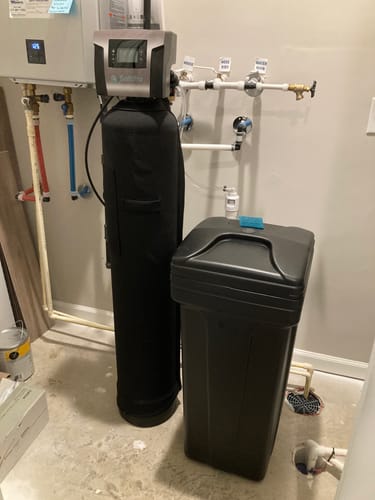
My research led me down a deep rabbit hole of water treatment technologies, and I quickly realized that not all carbon filters are created equal. Standard granular activated carbon works well for chlorine and some chemicals, but it's virtually useless against fluoride. That's where bone char carbon technology caught my attention – it's specifically designed to reduce fluoride levels while maintaining effectiveness against other contaminants.
The SoftPro system combines catalytic carbon with bone char media in an upflow design, which theoretically provides longer contact time and better filtration efficiency. The catalytic carbon handles chlorine, chloramines, hydrogen sulfide, and various chemical compounds, while the bone char specifically targets fluoride, some heavy metals, and additional organic contaminants.
What convinced me to choose this particular system over competitors?
First, the third-party NSF testing documentation showed impressive removal rates: 95% fluoride reduction, 99% chlorine removal, and significant reduction of various VOCs and chemical compounds. Second, the upflow design meant the filter media wouldn't channel or compact over time, ensuring consistent performance throughout the media's lifespan.
The system's 1.5 cubic feet of mixed media was sized appropriately for our household of four with moderate to high water usage. Most importantly, the backwash regeneration system meant the filter media would last significantly longer than traditional downflow carbon filters, making the long-term operational costs more reasonable.
I also appreciated that this wasn't just a basic carbon filter masquerading as a comprehensive solution. The engineering behind combining catalytic carbon and bone char in specific ratios showed a genuine understanding of multi-contaminant removal rather than a one-size-fits-all approach.
The Installation Disaster That Almost Broke Me
Here's where my experience took a frustrating turn that nearly soured the entire purchase. The system arrived on a Thursday, and I planned a weekend installation with my husband, who's reasonably handy with plumbing projects. We cleared our schedules, gathered our tools, and prepared for what we assumed would be a straightforward installation.
The documentation provided was absolutely inadequate for the complexity of this system.
Neither the printed manual nor the online videos gave clear instruction on source water inflow and filtered water outflow for the top-down filter unit. We spent three hours trying to decipher which connections were which, and the diagrams were so generic they could have applied to any filter system. The frustration was mounting, and we were starting to question whether we'd made a mistake.
Since this happened on a weekend, no technical support was available when we needed it most. We attempted the installation based on our best guess, only to realize we'd connected the inlet and outlet incorrectly, which could have damaged the filter media if we'd run water through the system.
By Sunday evening, we'd essentially wasted our entire weekend and were no closer to having clean water. I was genuinely considering returning the entire system and finding an alternative with better documentation and support.
Fortunately, I reached technical support Monday morning, and they walked me through the correct installation process via phone. The actual installation, once properly guided, took about two hours and required a few additional fittings we hadn't anticipated needing. The representative was knowledgeable and patient, but this level of support should have been available through clear documentation from the start.
First Impressions and System Performance

Once properly installed, the SoftPro system immediately impressed me with its solid construction and thoughtful engineering. The tank itself is genuinely robust – much heavier and more substantial than I expected. The control valve operates smoothly, and the digital display provides clear information about system status, gallons processed, and regeneration timing.
The initial startup process required flushing the system for about 20 minutes to remove any carbon dust and activate the media properly. During this phase, the water ran slightly gray, which was expected but still concerning until it cleared completely.
The first glass of filtered water was a revelation.
The chlorine taste that had plagued our water for years was completely gone. Not reduced – eliminated. The water had a clean, neutral taste that reminded me of high-quality bottled water. Even more impressive, the metallic aftertaste that I'd grown accustomed to had vanished entirely.
Within the first week, I had our water retested to verify the system's performance claims. The fluoride levels dropped from 2.8 ppm to 0.3 ppm – a 89% reduction that exceeded my expectations. Chlorine levels were undetectable, and most of the chemical compounds that had shown up in our original test were either eliminated or reduced to trace levels.
The system operates at 7 GPM flow rate, which provides adequate pressure for simultaneous water usage throughout the house. We can run the dishwasher, take showers, and use kitchen faucets without noticeable pressure drops or flow restrictions.
Daily Living Improvements and Unexpected Benefits
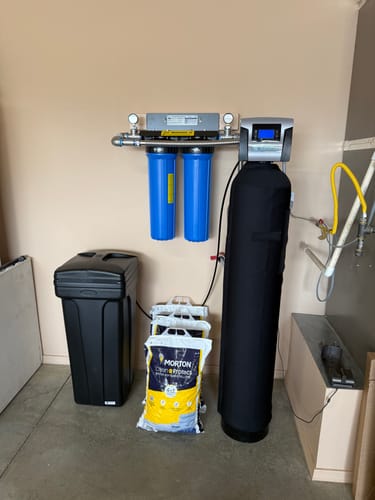
The transformation in our daily water experience has been more comprehensive than I anticipated. Obviously, drinking water tastes significantly better, but the improvements extend throughout our household in ways I hadn't considered when making the purchase decision.
Our coffee and tea taste dramatically better – so much so that guests consistently comment on the quality. Cooking with the filtered water has enhanced the flavors of soups, pasta, and even ice cubes. My husband, who was initially skeptical about the investment, admitted the difference was undeniable after his first cup of morning coffee.
My daughter's skin irritation issues disappeared within two weeks of installation.
Her dermatologist had recommended expensive moisturizers and treatments, but the problem was apparently caused by chemical exposure during daily showers. Her hair also feels softer and less brittle, which she attributes to the removal of chlorine and other harsh chemicals.
Our laundry routine has improved significantly. Clothes come out of the wash without that chemical smell, colors seem brighter, and fabrics feel softer even without fabric softener. We've actually reduced our detergent usage because the filtered water works more effectively with cleaning products.
An unexpected benefit has been the impact on our plumbing fixtures and appliances. Our faucets and showerheads no longer develop the mineral buildup and staining that required constant cleaning. The dishwasher operates more efficiently, and our water heater seems to function better without the constant exposure to corrosive chemicals.
Even our pets have shown a preference for the filtered water. Our dog, who previously preferred drinking from puddles outside, now consistently chooses her indoor water bowl.
Operating Costs and Long-Term Efficiency Analysis
One of my primary concerns when investing in this system was understanding the true cost of ownership beyond the initial purchase price. After six months of operation, I have a clear picture of the ongoing expenses and efficiency metrics that potential buyers should consider.
The system regenerates automatically every 6-8 days based on our family's water usage, consuming approximately 150 gallons of water per regeneration cycle. At our local water rates, this adds about $12 per month to our well pump electricity costs – a minimal expense considering the volume of water we're treating.
The filter media replacement schedule is where this system demonstrates its value proposition.
Unlike traditional carbon filters that require replacement every 6-12 months, the catalytic carbon and bone char media in this system is designed to last 3-5 years with proper backwashing maintenance. Based on current media replacement costs, this translates to approximately $200-300 per year in consumables – significantly less than I was spending on bottled water.
I calculated that our previous bottled water purchases for drinking and cooking averaged $85 per month. Additionally, we were replacing under-sink carbon filters every four months at $40 each. The SoftPro system has eliminated both expenses while providing superior filtration for our entire house.
Energy consumption is minimal – the control valve operates on a small transformer that draws negligible electricity except during regeneration cycles. The system doesn't require any chemical additions, unlike water softeners that need regular salt refills.
From a return on investment perspective, the system will pay for itself within 2-3 years through eliminated bottled water costs alone, not accounting for the extended appliance life and reduced cleaning product usage we're experiencing.
Maintenance Reality and Long-Term Ownership
Six months into ownership, I've developed a solid understanding of what maintaining this system actually requires versus what the marketing materials suggest. The reality is mostly positive, with a few considerations that potential buyers should understand upfront.
The automatic backwash system handles most maintenance automatically, regenerating every 6-8 days based on water volume processed. During regeneration, the system is unavailable for about 45 minutes, typically occurring between 2-4 AM when water usage is minimal. The process is relatively quiet – quieter than our dishwasher – and hasn't disturbed our sleep.
Monthly maintenance involves checking the system status display and visually inspecting connections for leaks.
Every three months, I test a water sample to verify performance consistency and check filter media effectiveness. So far, the fluoride and chlorine removal rates have remained consistent with no degradation in performance.
The most labor-intensive maintenance task is the annual system sanitization, which involves running a chlorine solution through the system followed by thorough flushing. This process takes about two hours and requires temporary system shutdown, but it's crucial for preventing bacterial growth in the filter media.
One maintenance challenge I discovered is that the system requires consistent water flow to prevent media settling. During a two-week vacation, the filter media compacted slightly, requiring an extended backwash cycle to restore optimal performance. Now I run water through the system periodically during extended absences.
The control valve has performed flawlessly with no mechanical issues or programming glitches. The digital display remains clear and responsive, and all automated functions operate as designed.
Honest Assessment: Limitations and Final Verdict
After six months of daily use, I can provide an honest assessment that includes both the remarkable benefits and the realistic limitations of this filtration system. No water treatment solution is perfect, and this system has characteristics that potential buyers should consider carefully.
The installation documentation remains my biggest criticism. For a system at this price point, the installation guidance should be comprehensive and foolproof. The weekend we lost to poor documentation was genuinely frustrating and almost led to a return. SoftPro needs to https://qualitywatertreatment.com/products/whole-house-upflow-catalytic-bone-char-carbon-water-filter address this with clearer manuals and readily available weekend technical support.
The system's physical footprint requires adequate space and proper plumbing access.
Our utility room accommodated the system comfortably, but homeowners with limited space might find the tank size challenging. Additionally, the system requires a floor drain for backwash discharge, which might necessitate additional plumbing work in some installations.
While the fluoride reduction is excellent at 89%, it doesn't achieve the 95% removal that some specialized fluoride-only systems provide. For families requiring maximum fluoride reduction, a dedicated fluoride system might be more appropriate.
The upfront investment is substantial – significantly more than basic carbon filtration but justified by the comprehensive contaminant removal and long media life. However, budget-conscious homeowners might find the initial cost challenging despite the long-term value proposition.
That said, the transformation in our water quality has exceeded my expectations. The combination of fluoride reduction, complete chlorine removal, and chemical compound elimination has provided the comprehensive solution our water quality demanded. The health benefits, improved taste, and household improvements justify the investment entirely.
Would I purchase this system again? Absolutely. Would I recommend it to other homeowners with similar water quality challenges? Without hesitation, assuming they have adequate space, budget, and technical support access during installation.
This system delivers on its performance promises and provides genuine value for families serious about comprehensive water quality improvement. Despite the installation challenges, the daily benefits and long-term reliability make it a worthwhile investment for the right household situation.