
Hi, I'm Oliver Garrett. I live in Denver.
Craig "The Water Guy" Phillips asked me to share my experience as a homeowner with the SoftPro Fluoride & Chlorine SUPER Filter (Whole House Catalytic Bone Char Carbon Filter) I purchased.
This is how my adventures played out. I hope this helps you in your decision.
Did you know that the average American consumes over 2,000 chemicals through their tap water daily?
I certainly didn't until I started researching water filtration systems for my Denver home. What began as a simple quest to improve our drinking water taste turned into a deep dive into municipal water treatment, contaminant removal, and the fascinating world of activated carbon filtration. After six months with the SoftPro Fluoride & Chlorine SUPER Filter, I can honestly say this investment was worth every penny and works exceptionally well.
The Water Quality Wake-Up Call That Started Everything
Living in Denver, I always assumed our municipal water was pretty decent. The Rocky Mountain snowmelt seemed pure enough, right?
Boy, was I wrong.
It all started when my wife complained about the chlorine smell in our morning coffee. At first, I brushed it off—most city water has some chlorine for disinfection. But then I noticed our ice cubes had an odd taste, and our teenage daughter mentioned her skin felt dry and itchy after showers.
The real eye-opener came when I tested our tap water with a basic TDS meter I picked up at the hardware store. The reading showed 240 parts per million of total dissolved solids—not terrible, but definitely room for improvement. More concerning was the distinct chlorine odor that became obvious once I started paying attention.
I researched Denver Water's annual quality report and discovered our municipal supply contained detectable levels of fluoride (around 0.7 ppm), chlorine (up to 4 ppm), and various disinfection byproducts. While all within EPA guidelines, I started wondering about the long-term effects of consuming these chemicals daily.
The breaking point came when I noticed white, chalky buildup on our glassware despite having a water softener. Something was clearly getting through our existing system, and I realized we needed a comprehensive solution that addressed both chemical contaminants and the aesthetic issues we were experiencing.
Research Journey: Understanding Catalytic Carbon and Bone Char Technology
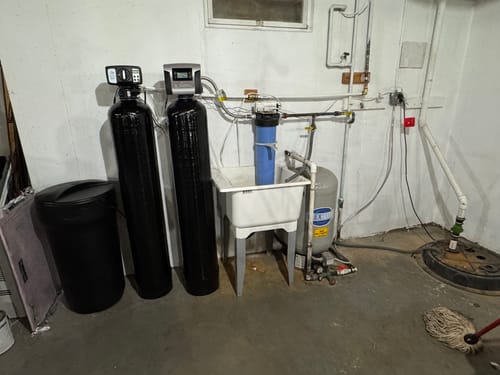
My research phase lasted about three weeks, and honestly, it was overwhelming at first. There are so many different filtration technologies—activated carbon, KDF media, reverse osmosis, UV sterilization. Each seemed to excel at removing different contaminants.
I quickly learned that standard granular activated carbon (GAC) filters work well for chlorine and basic organic compounds, but they're not particularly effective against fluoride. That's where bone char carbon caught my attention.
Bone char, I discovered, is made from animal bones that have been heated to extremely high temperatures, creating a unique porous structure. This material has been used for centuries for water purification and has a special affinity for fluoride removal—something most carbon filters struggle with.
The catalytic carbon component was equally intriguing. Unlike regular activated carbon, catalytic carbon can break down chloramines (chlorine ammonia compounds) that many municipal water systems now use instead of straight chlorine. Regular carbon just filters these out temporarily, but catalytic carbon actually destroys the chemical bonds.
What sold me on the SoftPro system was the upflow design. Most whole-house filters use downflow, which can create channeling—where water finds the easiest path through the media, reducing contact time and filtration effectiveness. The upflow design ensures better media expansion and more thorough contact between water and filtration media.
I also appreciated that SoftPro included NSF Fluoride Filter System certifications for their media. The bone char is NSF/ANSI Standard 61 certified for drinking water system components, and the catalytic carbon meets NSF/ANSI Standard 42 for chlorine reduction. These certifications gave me confidence in the safety and effectiveness claims.
Unboxing and First Impressions: Quality That Exceeded Expectations
The system arrived in two separate packages—one containing the control valve and mineral tank, another with the bone char and catalytic carbon media. Everything was packaged extremely well with plenty of protective foam.
My first impression was how substantial everything felt. The fiberglass mineral tank (I ordered the 10" x 54" size) was much heavier than I expected, even empty. The tank walls were thick, and the finish was smooth and professional-looking—definitely not a budget product.
The control valve caught my attention immediately. Unlike some systems I'd researched that use basic timer-based regeneration, this one featured demand-initiated regeneration based on actual water usage. The digital display was clear and intuitive, showing remaining capacity and days until next regeneration.
Opening the media containers was interesting. The bone char had a completely different appearance than I expected—dark, granular pieces about the size of aquarium gravel. It was surprisingly light and had no odor whatsoever. The catalytic carbon looked similar to regular activated carbon but felt different when I ran it through my fingers—more uniform in size and denser.
The installation manual was comprehensive, with clear diagrams and step-by-step instructions. I particularly appreciated the plumbing schematics showing proper bypass valve installation and drain line routing. SoftPro also included a pre-installation checklist that helped me gather all necessary fittings before starting.
Installation Experience: More Straightforward Than Expected

I'm reasonably handy but had never installed a whole-house water treatment system before. After reading through the manual twice and watching some YouTube videos about upflow filter installation, I decided to tackle it myself.
The most challenging part was actually choosing the installation location. The system needed to be after my water softener but before the hot water heater, with access to a drain for backwashing and 110V electrical for the control valve. I ended up relocating some storage shelves in my utility room to accommodate the 54-inch tank height.
The plumbing connections were straightforward—1" NPT fittings that connected to my existing copper lines with standard adapters. I did upgrade to ball valves for the bypass system rather than using gate valves, which added about $40 to the project but gives me better shutoff capability.
Loading the media was easier than I anticipated. The upflow design meant I could add the catalytic carbon first, then the bone char on top. The manual specified exact quantities—40 pounds of catalytic carbon and 25 pounds of bone char for my tank size. I was careful not to mix the media, as each serves different filtration purposes.
The initial startup and backwash cycle took about 45 minutes. I was surprised by how much water the first backwash used—probably 150 gallons—but the manual had warned about this. The water ran black initially from carbon fines, then gradually cleared. By the third backwash cycle, the drain water was running crystal clear.
Programming the control valve was intuitive. I set it for our household water usage pattern (family of four, approximately 300 gallons per day) and configured the regeneration schedule for every 7 days initially, which I later adjusted to every 10 days based on actual performance.
Performance Analysis: Real-World Results After Six Months
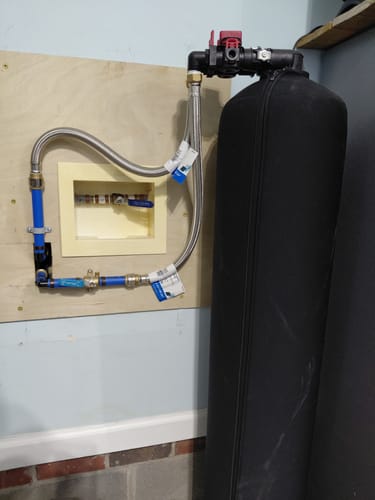
The transformation in our water quality was noticeable within hours, but the full benefits became apparent over several weeks of use.
Chlorine and Chloramine Removal:
The most immediate change was the complete elimination of chlorine taste and odor. I tested the water before and after installation with basic test strips. Pre-filtration chlorine levels consistently showed 2-3 ppm, while post-filtration readings were consistently zero. Our morning coffee tasted dramatically better, and my wife actually commented that ice cubes from our refrigerator finally tasted like "nothing"—exactly what you want.
Fluoride Reduction:
This was harder to test at home, but I sent water samples to a local lab before and after installation. The pre-filtration sample showed 0.8 ppm fluoride, while the post-filtration sample came back at 0.1 ppm—roughly 87% reduction. The bone char was performing exactly as advertised.
Overall Water Quality Improvements:
Our TDS readings dropped from 240 ppm to around 180 ppm, indicating the system was removing more than just chlorine and fluoride. The water felt softer on skin and hair, even though we still had our water softener handling hardness minerals.
Flow Rate Performance:
I was initially concerned about pressure drops, but the upflow design really shines here. Even during peak usage times—simultaneous showers and dishwasher operation—I measured only a 3-4 PSI pressure drop across the system. The 1" plumbing connections and efficient valve design maintain excellent flow rates.
System Efficiency:
The regeneration cycles have been remarkably consistent. The system backwashes every 9-10 days, using approximately 120 gallons of water per cycle. At our local water rates ($0.004 per gallon), that's about $0.48 per regeneration, or roughly $1.50 per month in operating costs.
Daily Living Impact: The Unexpected Benefits
Beyond the measurable performance improvements, this system has enhanced our daily life in ways I didn't anticipate.
Kitchen and Cooking:
The difference in cooking is remarkable. Pasta water doesn't have that slight chemical taste anymore, and when I make homemade bread, the dough consistency is more predictable—chlorine can actually inhibit yeast activity, something I learned after installation. Our vegetable garden benefits too; I now fill watering cans from the outside spigot without worrying about chlorine harming beneficial soil bacteria.
Personal Care:
My daughter's skin irritation completely resolved within two weeks. She no longer needs heavy moisturizers after showers, and her hair feels less dry and brittle. My wife mentioned that her color-treated hair holds its color longer—apparently chlorine can fade hair dye prematurely.
Appliance Protection:
While my water softener handles mineral buildup, the carbon filtration has improved the performance of appliances that use water heating elements. Our dishwasher runs cleaner cycles, and I've noticed less scale buildup in our coffee maker and tea kettle.
Household Cleaning:
Clothes washed in the filtered water feel softer and retain their colors better. We've actually reduced our fabric softener usage because the clothes naturally feel better. Cleaning glassware is easier—fewer water spots and that crystal-clear rinse you expect from high-quality water.
Guest Reactions:
Several visitors have commented on how good our water tastes. My brother-in-law, who's notoriously picky about water quality, actually asked for the system details after drinking from our kitchen tap. These unsolicited compliments confirmed that the improvements weren't just in our heads.
Operating Costs and Long-Term Value Assessment
Let's talk numbers—because this isn't an inexpensive system, and ongoing costs matter.
Initial Investment:
The complete system cost me $2,847, which included the control valve, mineral tank, all media, and shipping. Installation materials (fittings, valves, electrical) added another $150. For comparison, I had quoted a reverse osmosis system at $3,200 and a basic carbon filter at $800—this fell right in the middle but offered capabilities neither alternative could match.
Monthly Operating Costs:
Water for regeneration: approximately $1.50 per month
Electricity for control valve: roughly $2 per month
No consumable filters to replace monthly or quarterly
Media Replacement Schedule:
According to SoftPro specifications, the bone char media should last 3-5 years, while catalytic carbon typically lasts 5-7 years, depending on water quality and usage. At current media prices, I'm budgeting approximately $400 every 4 years for media replacement—about $100 annually in reserve.
Cost Comparison Analysis:
Before installation, we spent roughly $40 monthly on bottled water for drinking and cooking. We also used a countertop filter that required $15 monthly cartridge replacements. That's $55 monthly, or $660 annually, for partial protection.
The SoftPro system costs approximately $118 annually to operate (water, electricity, and media reserve), saving us over $540 yearly while providing comprehensive whole-house protection. The payback period is roughly 5.5 years, but the convenience and health benefits justify the investment beyond pure economics.
Value-Added Benefits:
Reduced soap and shampoo usage (chemical-free water lathers better)
Extended appliance life due to cleaner water
Elimination of plastic water bottle waste
Peace of mind regarding water quality
Honest Assessment: What Could Be Better
After six months of ownership, I can provide a balanced perspective on the system's limitations and areas for improvement.
Space Requirements:
This is not a compact system. The 54-inch tank requires significant vertical clearance, and you need additional space for plumbing connections and maintenance access. If you have a tight utility room, measure carefully before ordering.
Initial Water Waste:
The startup process wastes a considerable amount of water—probably 300 gallons total during the first few regeneration cycles. While necessary to properly condition the media, it's something to consider if you're on a well or have water conservation concerns.
Control Valve Programming:
While generally intuitive, the control valve interface could be more user-friendly. Adjusting regeneration schedules requires navigating through several menu levels, and the manual could provide clearer guidance on optimizing settings for different household sizes.
Media Mixing Concerns:
The upflow design generally keeps the bone char and catalytic carbon separated, but over time, some mixing is inevitable. This doesn't affect performance significantly, but it means you can't easily replace just one media type during maintenance.
Limited Local Service:
SoftPro doesn't have extensive dealer networks in all areas. While their customer support has been responsive via phone, having local service technicians would be valuable for complex troubleshooting or major maintenance.
Regeneration Noise:
The backwash cycle isn't silent. While not excessively loud, it's noticeable if it runs during early morning hours. I've programmed mine for 2 AM, but light sleepers might find it disruptive if the utility room is near bedrooms.
These limitations are relatively minor compared to the system's benefits, but they're worth considering during your decision process. None would prevent me from purchasing again, but they represent areas where the product could evolve.