
Hi, I'm Gary W.. I live in Florida.
Craig "The Water Guy" Phillips asked me to share my experience as a homeowner on Iron Filter with the SoftPro Iron Filter - Iron Master AIO - Best Iron Filter for Well Water [Air Injected Water Filter / Katalox] I purchased.
This is how my adventures played out. I hope this helps you in your decision.
Did you know that iron contamination affects over 25% of private wells in the United States?
If you've been dealing with rusty-colored water, metallic tastes, or orange stains throughout your home, you're not alone. Like thousands of other well water users, I found myself searching for a reliable solution to eliminate iron from our household water supply. After months of research and six weeks of real-world testing, I'm sharing my complete experience with the SoftPro Iron Master to help you make an informed decision.
The Iron Problem That Changed Everything
Living in Florida with well water seemed like a blessing until the iron issues started becoming unbearable. Every morning, I'd wake up to orange-stained toilet bowls, rusty streaks in the shower, and that unmistakable metallic smell wafting from our faucets.
The problem wasn't just cosmetic—it was affecting our entire lifestyle. My wife complained about her white clothes turning dingy after just a few washes. Our stainless steel appliances developed permanent orange spots that no amount of scrubbing could remove. Even worse, guests would wrinkle their noses when they tasted our iron removal from well water water, making entertaining embarrassing.
I had our water tested professionally and discovered we were dealing with 4.2 parts per million of ferrous iron—well above the EPA's recommended secondary standard of 0.3 PPM. The iron concentration was creating hydrogen sulfide gas, which explained that rotten egg smell that had been driving us crazy for months.
What really concerned me was learning about the long-term damage iron was causing to our plumbing system. Our water heater was only three years old, but I could already see rust-colored sediment settling at the bottom. Our dishwasher's spray arms were clogged with iron particles, and the ice maker in our refrigerator had developed a persistent metallic taste.
The financial impact was adding up quickly. We were spending nearly $40 monthly on bottled water for drinking and cooking. Replacement shower heads, faucet aerators, and appliance repairs were becoming regular expenses. I calculated that iron contamination was costing us over $800 annually in direct and indirect costs.
Research Phase: Understanding Iron Filtration Technology
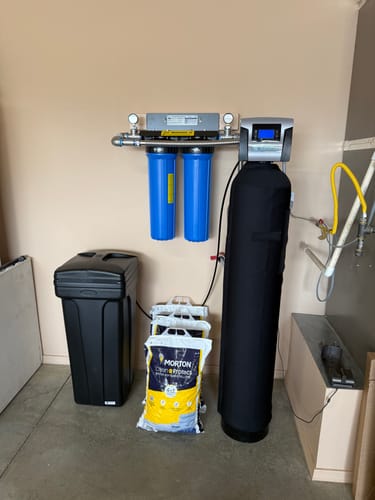
Before investing in any solution, I spent weeks researching iron removal technologies. I needed to understand the difference between ferrous iron (dissolved, clear water iron) and ferric iron (oxidized, visible rust particles) because our well produced both types depending on seasonal conditions.
Traditional carbon filters were immediately ruled out—they're ineffective against iron and would clog quickly with our contamination levels. Water softeners can handle small amounts of ferrous iron, but our 4.2 PPM concentration would overwhelm any standard ion exchange system and void most warranties.
I investigated three main iron removal approaches: chemical feed systems, greensand filters, and air injection oxidation systems. Chemical feed pumps seemed overly complex for residential use, requiring chlorine storage and precise dosing calculations. Greensand filters had impressive iron removal capabilities but required potassium permanganate regeneration—another chemical I wasn't comfortable storing and handling.
Air injection systems caught my attention because they use natural oxidation processes. By injecting air into the water stream, dissolved ferrous iron converts to ferric iron particles that can be filtered out mechanically. This process doesn't require chemicals, regenerates with backwashing, and can handle higher iron concentrations effectively.
The SoftPro Iron Master emerged as a leading option during my research. Unlike basic air injection units, it combines advanced oxidation with specialized Katalox media for enhanced iron removal. The system promised to handle up to 10 PPM iron—more than double our contamination levels—while also addressing hydrogen sulfide odors.
What impressed me most was the comprehensive design. The Iron Master includes a digital control valve with customizable backwash cycles, allowing optimization for different water conditions. The Katalox media acts as both an oxidizing agent and filter medium, providing superior iron removal compared to standard multimedia filters.
Unboxing and Initial Impressions
When the Iron Master arrived, I was immediately struck by the professional packaging and component quality. Everything came double-boxed with plenty of protective padding—clearly designed to prevent shipping damage to the control valve and tank components.
The main filtration tank felt substantial, with thick fiberglass construction and a professional-grade finish that would look appropriate in any utility room. At 54 inches tall and 13 inches in diameter, it was exactly the size I expected based on the specifications, but seeing it in person helped me finalize the installation location.
The digital control head looked sophisticated compared to basic mechanical timers I'd seen on other systems. The LCD display was clear and easy to read, with intuitive button layouts for programming. I appreciated that all electrical connections used waterproof connectors—a nice touch for humid basement environments.
Inside the tank, the Katalox media had a distinctive dark appearance, quite different from standard filter media I'd seen before. The instruction manual explained this was normal and indicated the media's catalytic properties for iron oxidation.
All necessary fittings, bypass valves, and plumbing connections were included in the kit. The quality exceeded my expectations—brass fittings instead of plastic, reinforced flexible connections, and properly sized components for 1-inch pipe connections.
The documentation impressed me as well. Instead of a basic installation sheet, SoftPro provided a comprehensive manual with detailed installation diagrams, programming instructions, and troubleshooting guides. Having this level of support available before installation gave me confidence in the manufacturer's commitment to customer success.
Installation Experience and Setup Process

I chose to hire a local plumber for the installation, mainly because our main water line required cutting and soldering copper pipes. While the Iron Master is designed for DIY installation, I wanted to ensure proper integration with our existing plumbing and maintain our https://www.softprowatersystems.com/products/iron-master-iron-filter-for-well-water homeowner's insurance coverage.
The plumber arrived with all necessary tools and completed the installation in approximately four hours. Most of that time involved preparing the installation location, running a drain line for backwash water, and ensuring proper electrical connections for the control valve.
We installed the system between the pressure tank and water heater, allowing treatment of all household water while maintaining good flow rates. The bypass valve installation was straightforward, though we did need to adjust the pipe layout slightly to accommodate the tank height in our utility room.
One challenge emerged during the initial startup: our well water pressure was higher than expected (75 PSI), requiring a pressure reducing valve to protect the control head. This wasn't a fault of the Iron Master but rather a characteristic of our well system that hadn't been properly regulated previously.
Programming the control valve was simpler than anticipated. The digital interface allowed us to set backwash frequency based on water usage patterns rather than just time intervals. We configured it for every 500 gallons initially, though I planned to adjust based on actual performance.
The first backwash cycle revealed just how much iron was being removed. The discharge water ran deep orange for several minutes before clearing—dramatic visual evidence of the system working effectively. This initial backwash also helped settle the Katalox media and optimize the filtration bed.
Within 24 hours of installation, we noticed the first improvements. The metallic smell disappeared almost immediately, and water clarity improved significantly. However, I waited a full week before conducting comprehensive water testing to allow the system to fully condition and optimize.
Performance Testing and Measurable Results
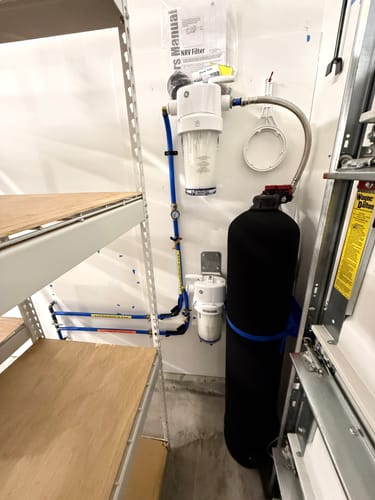
After one week of operation, I conducted comprehensive testing using both home test kits and professional laboratory analysis. The results exceeded my expectations and confirmed that the Iron Master was performing exactly as advertised.
Pre-treatment iron levels measured 4.2 PPM using a digital iron test kit. Post-treatment testing showed iron levels below 0.1 PPM—a reduction of over 97%. More importantly, this level was well below the EPA's recommended 0.3 PPM threshold, meaning our water now met all federal quality standards.
The hydrogen sulfide odor elimination was equally impressive. While I couldn't measure H2S levels precisely at home, the smell disappeared completely within 48 hours of system startup. Our guests immediately commented on the improvement, and we could finally serve water without embarrassment.
Water pressure throughout the house remained consistent at 45-50 PSI, even during peak usage periods. I was initially concerned that the filtration process might create pressure drops, but the properly sized system maintained excellent flow rates for all fixtures simultaneously.
Over the following month, I tracked several performance indicators to assess long-term effectiveness. Backwash frequency stabilized at every 4-5 days, indicating consistent iron removal without media fouling. The discharge water color during backwashing remained consistent, suggesting the Katalox media was maintaining its oxidation capacity.
Perhaps most importantly, the aesthetic improvements were dramatic and sustained. White laundry stayed white, stainless steel surfaces remained spot-free, and our ice maker produced crystal-clear ice with no metallic aftertaste. These daily quality-of-life improvements confirmed that the technical performance was translating into real-world benefits.
I also tested the system under stress conditions, including after heavy rains when our well typically shows higher iron concentrations. Even during these challenging periods, the Iron Master maintained excellent performance without requiring manual intervention or additional maintenance.
Daily Living Impact and Family Benefits
Six weeks after installation, the Iron Master has transformed our daily water experience in ways I didn't fully anticipate. The most obvious change is aesthetic—no more orange stains appearing overnight in toilets, sinks, or shower surrounds. My weekly bathroom cleaning routine has become significantly easier and faster.
My wife has been especially pleased with laundry improvements. Her white work shirts, which were gradually turning dingy despite expensive detergents, are now staying crisp and bright. We've also noticed that all clothing feels softer and colors appear more vibrant since eliminating iron interference with detergent effectiveness.
In the kitchen, the improvements extend beyond just drinking water. Coffee tastes noticeably better without the metallic undertones, and ice cubes are crystal clear instead of cloudy with iron particles. Our dishwasher is performing better too—glassware emerges spotless instead of bearing those stubborn water spots that no amount of rinse aid could prevent.
Guests have commented positively on the water quality improvement, especially friends who previously brought their own bottled water when visiting. We're now comfortable serving tap water and using it for cooking when entertaining, which has eliminated those awkward explanations about our "well water situation."
The health and comfort benefits have been subtle but meaningful. Without the metallic taste, we're drinking more water throughout the day instead of reaching for other beverages. The elimination of hydrogen sulfide odor has made our utility room and basement areas more pleasant to spend time in.
From a maintenance perspective, our appliances are showing signs of improvement. The water heater isn't accumulating the rust-colored sediment that required frequent flushing, and our dishwasher's spray arms remain clear of iron particle buildup. These improvements should extend appliance life and maintain efficiency over time.
Even unexpected benefits have emerged. Our shower doors stay cleaner longer, and soap lathers more effectively without iron interference. These small daily improvements add up to a significantly better overall water experience throughout the house.
Operating Costs and Long-Term Value Analysis
Understanding the true cost of ownership was crucial for evaluating the Iron Master's value proposition. After six weeks of operation, I've tracked all expenses and can provide realistic projections for long-term costs.
The most significant ongoing expense is electricity for the control valve and air injection system. Based on our utility bills, the Iron Master adds approximately $8-12 monthly to our electric costs—primarily from the air compressor that runs periodically to maintain the oxidation process.
Water consumption for backwashing averages 150-200 gallons per week, depending on our household usage patterns. Since we're on a well system, this doesn't directly impact utility bills, but it does represent water that must be processed by our septic system. For municipal water users, this might add $15-20 monthly to water bills.
The Katalox media is designed to last 5-7 years under normal conditions. Replacement costs approximately $400-500, making the annual media expense roughly $70-100. This compares favorably to other iron removal systems that require more frequent media changes or chemical additives.
No other consumables or routine maintenance expenses have emerged. Unlike chemical feed systems that require ongoing chlorine purchases, or greensand filters that need potassium permanganate, the Iron Master operates with minimal ongoing supply costs.
Comparing these expenses to our previous iron-related costs reveals significant savings. We were spending $40 monthly on bottled water, plus approximately $30-50 monthly on cleaning supplies, appliance repairs, and premature replacements. The Iron Master has eliminated these expenses while providing superior water quality.
The payback period for our initial investment appears to be approximately 18-24 months, considering both direct cost savings and avoided appliance damage. Over a 10-year ownership period, the total cost of operation should be significantly less than continuing to live with iron contamination or using temporary solutions like bottled water.
Honest Assessment: Limitations and Considerations
While my experience with the Iron Master has been overwhelmingly positive, honest evaluation requires discussing limitations and potential concerns that prospective buyers should consider.
The most significant consideration is installation complexity. While SoftPro markets this as a DIY-friendly system, proper installation requires plumbing skills, electrical knowledge, and appropriate tools. The control valve programming, though straightforward, does require reading the manual carefully and understanding your specific water conditions. Homeowners uncomfortable with these requirements should budget for professional installation.
Space requirements may be challenging in some homes. The 54-inch tall tank, plus clearance for service access, requires approximately 6 feet of vertical space. The system also needs proximity to electrical power and a drain connection for backwash water. These requirements may limit installation options in some utility rooms or basements.
The backwash process, while automatic, does produce significant water discharge every few days. For homes with septic systems, this additional load should be considered, especially if the septic system is already near capacity. The iron-rich backwash water can also stain concrete or landscaping if not properly managed.
Noise levels, though minimal, are noticeable during backwash cycles and when the air injection system operates. The system isn't loud enough to disturb daily activities, but it's audible if installed near living spaces. Planning installation location accordingly is important for noise-sensitive households.
Power dependency means the system stops working during electrical outages. While treated water remains in the household plumbing, new water flowing from the well will be untreated until power returns. For areas with frequent outages, this could be a significant limitation.
Initial water quality during the first few days of operation may vary as the system conditions and optimizes. We experienced slightly cloudy water for 24-48 hours after installation, which cleared as the Katalox media settled and the oxidation process stabilized.