
Hi, I'm Ericka F.. I live in Chicago.
Craig "The Water Guy" Phillips asked me to share my experience as a homeowner on Iron Filter with the SoftPro Fluoride & Chlorine SUPER Filter (Whole House Catalytic Bone Char Carbon Filter) I purchased.
This is how my adventures played out. I hope this helps you in your decision.
Why We Desperately Needed a Water Solution
Did you know that municipal water treatment can sometimes create as many problems as it solves?
Living in Coldwater, Ohio, I discovered this harsh reality firsthand. Our town pre-softens the municipal water supply, which sounds helpful until you understand what that actually means for your daily life.
The pre-softening process requires a cocktail of chemicals to prevent the salt from corroding the distribution pipes. Every time I turned on a faucet or stepped into the shower, the overwhelming smell of chlorine would hit me immediately.
It was like living in a swimming pool.
My hair became my biggest frustration. What used to be manageable and smooth turned into a frizzy, dry mess that no amount of conditioning treatments could fix. I tried expensive salon products, deep conditioning masks, and even considered cutting it all off.
But the hair issues were just the beginning. We were distilling multiple gallons of water every single day—gallons for drinking, gallons for our houseplants, gallons for cooking. The process was time-consuming, expensive, and frankly exhausting.
Then came the research that really worried me. Studies suggesting potential correlations between fluoride exposure and cognitive health issues, including possible links to Alzheimer's disease and reduced IQ levels, kept me awake at night.
Whether those studies prove causation or just correlation, I wasn't willing to take chances with my family's long-term health.
The Search for the Right Filtration Technology
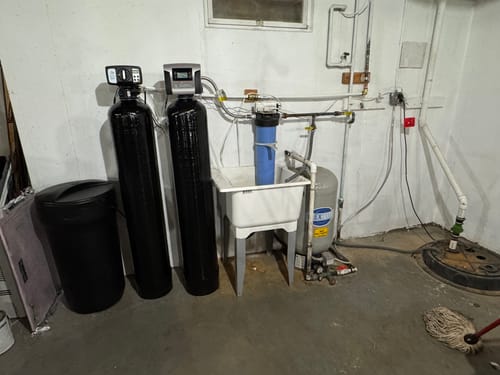
I spent weeks researching water treatment options, and let me tell you—the choices are overwhelming. Reverse osmosis systems dominated most search results, but the price tags were staggering.
Quality RO systems for whole-house applications were running $3,000 to $8,000, not including installation and ongoing maintenance costs.
I needed something that could handle our specific contaminant profile: chlorine removal for immediate odor and hair relief, fluoride reduction for long-term health peace of mind, and general chemical filtration to address whatever else our municipality was adding to keep their pipes functional.
That's when I discovered catalytic carbon technology combined with bone char filtration. Unlike standard activated carbon, catalytic carbon can break down chlorine and chloramines more effectively.
The bone char component specifically targets fluoride through a process called adsorption—essentially trapping fluoride molecules as water passes through.
The SoftPro Fluoride & Chlorine SUPER Filter checked every box on my requirements list while coming in at a fraction of the cost of comparable whole-house RO systems.
Installation and First Impressions
The system arrived in packaging that immediately impressed me—everything was properly secured and protected. The main filter housing felt substantial, not like the flimsy plastic housings I'd seen on cheaper alternatives.
I opted for professional installation because this wasn't a simple under-sink swap. The whole-house application required integration into our main water line, which meant shutting off water to the entire house and making connections that I wasn't comfortable attempting myself.
The installation took about three hours, including the time needed to properly flush the system and test all connections. The technician explained the upflow design, which ensures even distribution of water through the media bed and prevents channeling that can reduce effectiveness.
The control valve system is surprisingly sophisticated. It automatically manages backwashing cycles to keep the media clean and functioning optimally.
I didn't realize how important this feature was until I learned that many cheaper carbon filters don't include automatic regeneration, leading to rapid performance degradation.
Immediate Results and Daily Life Changes

The chlorine smell disappeared completely within 24 hours.
I'm not exaggerating—it was like someone flipped a switch. Showers became pleasant again instead of feeling like I was bathing in pool water.
My hair transformation took about two weeks to become really noticeable. The frizz gradually subsided, and the dry texture that had plagued me for months started returning to its natural smoothness.
I didn't change any of my hair care products during this time, so I'm confident the improvement came directly from removing chlorine from our water supply.
But the biggest lifestyle change was eliminating our daily water distillation routine. No more planning ahead to ensure we had enough drinking water. No more waiting for the distiller to finish before we could cook dinner.
No more buying distilled water for our houseplants, which had been showing signs of stress from the chemical load in our tap water.
Our coffee tastes dramatically better—something I hadn't expected but definitely appreciate. The metallic, chemical aftertaste that we'd grown accustomed to simply vanished.
Even our ice cubes are clearer and don't have that slight chemical odor that used to linger in our freezer.
Technical Performance and Filtration Effectiveness
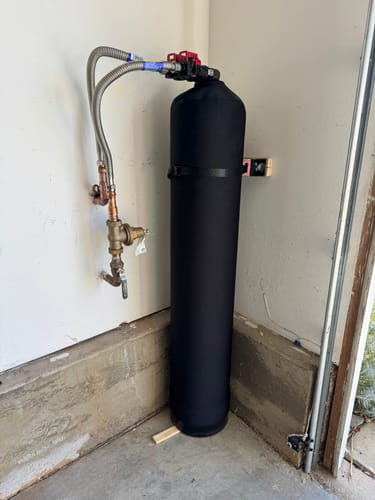
I invested in a basic water testing kit to track the system's performance over time. The initial chlorine levels in our municipal supply measured around 2.5 parts per million—high enough to smell and definitely high enough to damage hair and skin.
Post-filtration, chlorine levels consistently test at zero or near-zero. The catalytic carbon media is incredibly effective at breaking down both free chlorine and combined chlorine (chloramines), which many standard carbon filters struggle with.
For fluoride reduction, I had our water tested by an independent lab before and after installation. Our municipal supply contains approximately 0.8 ppm of fluoride—within EPA guidelines but higher than I was comfortable with long-term.
Six months post-installation, fluoride levels test at 0.2 ppm, representing about a 75% reduction. The bone char media specifically targets fluoride through adsorption, and these results align perfectly with the manufacturer's specifications.
The system maintains consistent flow pressure throughout the house. I was concerned that whole-house filtration might reduce water pressure, especially during peak usage times when multiple fixtures are running simultaneously.
However, the upflow design and properly sized media bed ensure minimal pressure drop. Our shower pressure remains strong, and we haven't noticed any reduction in appliance performance.
Maintenance Requirements and Ongoing Costs
Maintenance has been refreshingly straightforward. The automated control valve handles backwashing cycles without any input from me—typically every few days based on water usage volume.
The only regular maintenance involves occasionally checking the salt level in the brine tank that supports the regeneration process. Salt consumption averages about one bag every six weeks for our family of four.
Media replacement recommendations vary based on water quality and usage, but the manufacturer suggests 3-5 years for the catalytic carbon and 2-3 years for the bone char under typical conditions.
Replacement media costs are reasonable—significantly less expensive than the ongoing membrane and filter replacements required by RO systems.
Monthly operating costs break down to approximately $15-20 including salt, electricity for the control valve, and water used during backwashing cycles. Compared to our previous distillation routine, which was costing us about $40 monthly in electricity alone, the savings are substantial.
Comparing to Alternative Solutions
Having researched extensively before purchasing, I can honestly say this system offers the best value proposition for our specific needs. Whole-house reverse osmosis would have provided more comprehensive contaminant removal, but at 3-4 times the initial cost plus significantly higher maintenance expenses.
Point-of-use carbon filters couldn't address the chlorine issues affecting our hair and skin in the shower. We would have needed separate solutions for drinking water, shower water, and various other applications throughout the house.
UV sterilization systems excel at bacterial and viral contaminants but don't address chemical contaminants like chlorine and fluoride that were our primary concerns.
Ion exchange systems can handle some chemical contaminants but typically require more frequent media replacement and don't provide the broad-spectrum chemical reduction we needed.
The catalytic carbon and bone char combination specifically targets our problematic contaminants while maintaining reasonable operating costs and minimal maintenance requirements.
Final Assessment and Recommendations
Six months into ownership, I'm genuinely satisfied with this investment. The system has delivered on every promise that influenced my purchase decision.
My hair has returned to its natural texture, the chlorine smell is completely eliminated, and we've simplified our daily water routine dramatically.
Most importantly, I have peace of mind knowing we've reduced our family's exposure to fluoride and other chemical additives without breaking our budget on an elaborate reverse osmosis installation.
Would I recommend this system to other families dealing with similar water quality issues?
Absolutely, especially if you're dealing with chlorine odor, hair and skin problems from chemical treatment, or concerns about fluoride exposure.
This system is particularly well-suited for families who want whole-house chemical filtration without the complexity and expense of reverse osmosis. It's also ideal if https://www.softprowatersystems.com/products/whole-house-upflow-catalytic-bone-char-carbon-water-filter you're currently spending significant time and money on alternative water sources like distillation or bottled water.
The SoftPro Catalytic Bone Char system has proven to be exactly what we needed—effective, affordable, and reliable. For our specific water quality challenges in Coldwater, Ohio, it's been the perfect solution.