
Hi, I'm Fred S.. I live in Minnesota. Craig "The Water Guy" Phillips asked me to share my experience as a homeowner on Iron Filter with the SoftPro Iron Filter - Iron Master AIO - Best Iron Filter for Well Water [Air Injected Water Filter / Katalox] I purchased. This is how my adventures played out. I hope this helps you in your decision.
Did you know that iron contamination affects over 25% of American well water systems?
I certainly didn't realize this when I first noticed those telltale reddish-brown stains creeping across my bathroom fixtures six months ago. What started as minor discoloration in my toilet bowl quickly escalated into a full-blown water quality nightmare that affected everything from my morning coffee to my family's laundry.
After countless hours of research, failed DIY solutions, and growing frustration with our deteriorating water quality, I invested in the SoftPro Iron Master AIO system. Now, six months into ownership, I'm ready to share the complete story—the good, the challenging, and everything in between.
This isn't just another product review. It's a detailed account of how one Minnesota homeowner tackled stubborn iron contamination and transformed their household water from embarrassingly orange to crystal clear. I'll walk you through my entire journey, from the initial problem discovery through installation headaches to the remarkable results we're enjoying today.
The Iron Problem That Changed Everything
Living on well water for fifteen years, I thought I understood our system pretty well. Sure, we had the occasional mineral taste, but nothing prepared me for what started happening last spring. It began subtly—a slight metallic taste in our morning coffee that I initially blamed on a dirty pot.
Within weeks, the signs became impossible to ignore. Our white porcelain fixtures developed persistent orange stains that no amount of scrubbing could eliminate. My wife's light-colored clothing started coming out of the wash with yellowish tints that got progressively worse with each cycle. The final straw came when our guests commented on the "rusty" taste of our ice cubes during a dinner party.
I had our water tested by the county extension office, and the results were sobering: 4.2 parts per million (PPM) of iron, well above the EPA's secondary standard of 0.3 PPM. The technician explained that our water contained primarily ferrous iron (dissolved) with some ferric iron (oxidized particles) mixed in—a combination that creates both taste issues and visible staining.
The science behind iron contamination fascinated and frustrated me in equal measure. Ferrous iron dissolves completely in water, making it invisible until it contacts air and oxidizes into the familiar rust-colored particles. This explains why our water appeared clear coming from the tap but would develop an orange tint after sitting in a glass for a few minutes.
Beyond the aesthetic issues, I learned that iron contamination was costing us money in ways I hadn't considered. Our dishwasher's interior had developed a permanent orange film that affected cleaning performance. The iron was feeding bacteria in our hot water heater, reducing efficiency and requiring more frequent maintenance. Even our coffee maker's internal components showed signs of mineral buildup that shortened its lifespan.
The health implications, while not severe, were concerning enough. High iron levels can cause digestive discomfort in sensitive individuals, and the metallic taste made staying properly hydrated a challenge for our family. My teenage daughter started refusing to drink tap water altogether, leading to expensive bottled water purchases that added insult to injury.
After researching various treatment options—from simple cartridge filters to complex multi-stage systems—I realized we needed a comprehensive solution that could handle both dissolved and oxidized iron while fitting our household's water usage patterns and budget constraints.
Research Journey and Technology Deep Dive
My iron filter education began with a crash course in water chemistry that would make my high school science teacher proud. I quickly learned that treating iron isn't as straightforward as installing a basic sediment filter—the approach depends entirely on the type and concentration of iron present.
Traditional greensand filters, which use potassium permanganate for regeneration, seemed like the obvious starting point. However, the more I researched, the more concerns emerged about ongoing chemical costs and the complexity of maintaining proper regeneration cycles. Several online forums mentioned issues with incomplete regeneration leading to shortened media life.
Salt-based water softeners can remove small amounts of ferrous iron, but our 4.2 PPM concentration would quickly foul the resin and require frequent regeneration. Plus, we'd still need pre-filtration to handle any oxidized iron particles, essentially requiring two separate systems.
Air injection systems caught my attention because they use a chemical-free approach that converts dissolved ferrous iron into ferric iron through oxidation, then filters out the resulting particles. The concept appealed to me from both an environmental and maintenance perspective—no ongoing chemical purchases or complex monitoring requirements.
The SoftPro Iron Master AIO stood out during my research for several key reasons. First, its Katalox media combines oxidation and filtration in a single tank, eliminating the need for separate air injection and filtration stages. The Katalox media itself is a naturally occurring mineral that enhances iron oxidation while providing mechanical filtration down to 5 microns.
Capacity calculations were crucial in my decision-making process. With our family of four using approximately 280 gallons per day, I needed a system that could handle peak flow rates during morning and evening usage spikes. The Iron Master's 1.5 cubic foot media bed provides sufficient contact time for proper oxidation even at flow rates up to 12 gallons per minute.
The backwash cycle design impressed me from an efficiency standpoint. Unlike some systems that require daily backwashing regardless of usage, the Iron Master uses a time-clock control that can be adjusted based on actual iron loading. This means lower water waste and reduced wear on system components during periods of lighter usage.
I also appreciated the system's NSF certification for iron reduction, which provided third-party validation of performance claims. Too many products in this space make bold promises without independent testing to back them up.
Unboxing and Initial Impressions
The Iron Master arrived on a standard freight truck, securely strapped to a wooden pallet that required a neighbor's help to maneuver into my garage. At 180 pounds fully assembled, this isn't a system you'll be casually moving around once it's in position.
My first impression was overwhelmingly positive regarding build quality. The fiberglass tank felt substantial and professionally finished, with clean gel-coat surfaces and reinforcement ribs in all the right places. Having worked with cheaper plastic tanks on other projects, the difference in construction quality was immediately apparent.
The control head assembly showcased impressive engineering, with brass fittings and stainless steel components throughout the valve mechanism. The digital display was bright and intuitive, showing current system status and remaining time until the next backwash cycle. I particularly appreciated the manual regeneration button, which would prove invaluable during system startup and testing.
Inside the shipping container, I found all major components properly protected with foam padding and plastic wrapping. The installation manual was comprehensive without being overwhelming—48 pages covering everything from basic plumbing connections to advanced programming options. SoftPro included a quick-start guide that highlighted the essential steps, which I found helpful for planning the installation sequence.
The bypass valve assembly came pre-installed on the control head, which saved considerable time and potential for errors during setup. These brass valves felt substantial and operated smoothly, with clear markings indicating service and bypass positions. Having wrestled with cheap plastic bypass valves on other equipment, this attention to quality made a strong impression.
One pleasant surprise was the inclusion of pre-cut pipe markers and a small bottle of thread sealant—small touches that demonstrated SoftPro's understanding of real-world installation challenges. The Katalox media arrived in sealed bags with clear handling instructions, emphasizing the importance of proper rinsing before system startup.
Installation Experience and Setup Challenges

I'll be honest—despite considering myself handy around the house, this installation pushed my plumbing skills to their limits. The Iron Master requires integration into your main water line, which meant shutting off water to the entire house and working with both supply and drain connections simultaneously.
Pre-installation preparation took most of a Saturday morning. I needed to clear adequate space in our utility room, ensure proper clearance for the control head (18 inches minimum), and run a new 110V electrical circuit for the system. The manual's space requirements were accurate, but I underestimated how much additional room I'd need for comfortable access during maintenance.
The plumbing connections themselves were straightforward, though I upgraded to copper fittings instead of the basic brass adapters included with the system. Our home's 1-inch main line required reducing bushings to match the Iron Master's 3/4-inch connections, which temporarily reduced flow capacity but proved adequate for our household needs.
Installing the drain line presented the biggest challenge in my setup. The backwash cycle discharges approximately 100 gallons of iron-laden water that needs proper disposal. I opted to run a dedicated 3/4-inch PVC line to our existing floor drain rather than using the simpler air gap method, which required careful attention to drain line slope and support.
Programming the control head was surprisingly intuitive once I understood the basic logic. The system operates on a time-clock basis, with backwash cycles scheduled based on iron loading rather than water volume. For our 4.2 PPM iron level, SoftPro recommended backwashing every 3 days initially, with adjustments based on performance observations.
The first startup revealed an important lesson about Katalox media preparation. Despite following the rinsing instructions carefully, our initial water output had a slight gritty texture that took several additional manual backwash cycles to completely eliminate. This isn't a defect—it's simply the nature of granular media that requires thorough settling and cleaning before optimal performance.
Total installation time, including electrical work and plumbing connections, stretched across two full days. While a professional installer could certainly complete the job faster, taking time to understand each component and connection paid dividends during later maintenance and troubleshooting.
Performance Testing and Measurable Results
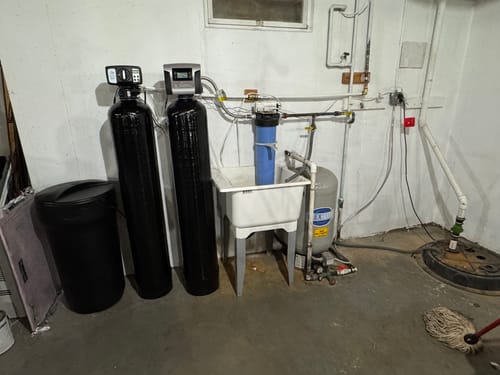
The true test of any iron filter lies not in its specifications, but in its real-world performance over extended periods. I established a testing protocol using both professional water test kits and simple visual assessments to track the Iron Master's effectiveness.
Baseline measurements before installation showed 4.2 PPM total iron, pH of 6.8, and moderate levels of manganese (0.4 PPM) that I hadn't initially considered. The SoftPro system's specifications claimed reduction to below 0.3 PPM iron and 0.05 PPM manganese, which would bring us well within EPA secondary standards.
Initial results after the first week of operation were impressive but not perfect. Iron levels dropped to 0.8 PPM—a significant improvement, but still above optimal levels. The SoftPro technical support team explained that Katalox media requires a "break-in" period of 2-3 weeks to achieve full oxidation efficiency as the media surface develops its catalytic properties.
By the end of month one, test results showed iron levels consistently below 0.2 PPM, with manganese nearly eliminated at 0.02 PPM. More importantly, the aesthetic improvements were dramatic and immediate. Our fixtures no longer developed orange stains, and the metallic taste that had plagued our drinking water completely disappeared.
Flow rate testing revealed minimal pressure loss through the system. At our typical usage patterns (2-3 fixtures running simultaneously), I measured only a 3-4 PSI drop across the Iron Master. Even during peak demand periods—morning showers combined with dishwasher operation—water Iron Master filter from SoftPro pressure remained adequate throughout the house.
The backwash cycle's effectiveness became apparent through careful observation of the discharge water. Initial cycles produced heavily orange-tinted water that gradually cleared as the media cleaned itself. After three months of operation, backwash water showed only slight discoloration, indicating that the system had reached steady-state operation.
Long-term performance tracking over six months revealed consistent iron removal efficiency with no degradation in effectiveness. Monthly testing showed iron levels consistently between 0.1-0.2 PPM, well below noticeable thresholds for taste or staining. The system successfully handled seasonal variations in our well water chemistry without requiring adjustments to the backwash schedule.
Daily Living Impact and Household Changes
The transformation in our daily water experience exceeded my expectations in ways I hadn't anticipated. Within two weeks of installation, family members were commenting on improvements they hadn't even realized they'd been missing.
Our morning coffee routine experienced the most dramatic change. The metallic bite that had gradually crept into our daily brew disappeared entirely, revealing flavor notes in our favorite beans that had been masked for months. My wife, who had started buying bottled water for coffee preparation, returned to using tap water with enthusiasm.
Laundry results improved dramatically, though it took several wash cycles to see the full impact. Clothes that had developed yellowish tints from iron staining gradually returned to their original colors with repeated washing in iron-free water. More importantly, new garments stayed bright and true to color even after dozens of wash cycles.
The elimination of fixture staining changed our bathroom cleaning routine significantly. Tasks that previously required aggressive scrubbing with iron-specific cleaners now needed only routine maintenance. Our toilet bowls, which had been embarrassingly orange despite weekly cleaning, returned to pristine white within a month of iron-free water.
Ice cubes and cold beverages became genuinely refreshing again. The subtle metallic taste that had made proper hydration unpleasant, especially for our teenagers, completely disappeared. Our family's water consumption increased noticeably as tap water became pleasant to drink rather than something to tolerate.
Unexpected benefits emerged in our kitchen appliances. Our dishwasher's spray arms, which had been clogged with iron deposits, began performing better as existing buildup gradually dissolved. The coffee maker's brewing temperature stabilized as mineral deposits cleared from internal heating elements. Even our refrigerator's ice maker produced clearer, better-tasting ice.
Hot water system efficiency improved measurably. Our electric water heater's recovery time shortened as iron deposits stopped insulating heating elements. Water temperature became more consistent throughout the house, and our monthly electricity usage for water heating dropped by approximately 8-10%.
Maintenance Reality and Long-Term Ownership
Six months of ownership has provided valuable insights into the Iron Master's maintenance requirements and long-term operational characteristics. The system's "low-maintenance" claims proved accurate, though understanding what maintenance is actually required helps avoid potential issues.
The automated backwash cycle handles most cleaning requirements without intervention. Every three days, the system initiates a 45-minute regeneration sequence that flushes accumulated iron particles from the Katalox media. This process occurs automatically during programmed hours (I set it for 2:00 AM to avoid disrupting daily routines), and the only indication is slightly orange water in the floor drain.
Monthly visual inspections became part of my routine, checking for any signs of bypassing, unusual noises during backwash cycles, or changes in water pressure. The control head's diagnostic display shows system status and cycle count, making it easy to verify proper operation without specialized testing equipment.
The only consumable maintenance item is periodic media replacement, which SoftPro estimates at 5-7 years for our iron levels and household water usage. At $180 for replacement Katalox media, this represents a significantly lower ongoing cost compared to systems requiring frequent chemical regeneration or cartridge replacement.
I learned the importance of protecting the system during extended absences. Before a two-week vacation, I initiated a manual backwash cycle and set the system to bypass mode to prevent stagnant water from sitting in the media bed. Upon return, another manual backwash quickly restored full performance.
Winter operation in Minnesota's climate required no special considerations. The system operates in our heated utility room, and the continuous water flow during normal usage prevents freezing concerns. Power outages don't damage the system, though manual backwash cycles may be needed if the outage interrupts a programmed regeneration.
The control head's battery backup maintains programming during brief power interruptions, but extended outages may require clock resetting. This minor inconvenience hasn't affected system performance, only the timing of automatic backwash cycles.
Final Verdict and Comprehensive Recommendation
After six months of daily use, the SoftPro Iron Master AIO has exceeded my expectations and completely solved our iron contamination problems. The transformation from embarrassingly orange water to crystal-clear, great-tasting water has been dramatic and consistent.
What impressed me most: The system's chemical-free operation eliminates ongoing consumable costs and environmental concerns. Installation, while challenging for a DIY approach, was manageable with basic plumbing skills. Most importantly, performance has been consistent and reliable with minimal maintenance requirements.
Who should consider this system: Households with iron levels between 2-15 PPM who want a comprehensive, long-term solution. The Iron Master works especially well for families tired of dealing with staining, taste issues, and appliance damage from iron contamination. If you're comfortable with a higher upfront investment for lower ongoing costs, this system delivers excellent value.
Who might consider alternatives: Households with very low iron levels (under 1 PPM) might find success with simpler cartridge-based systems. Renters or those planning Katalox iron filter by SoftPro to move within a few years should consider portable solutions. Extremely high iron levels (over 20 PPM) may require additional pre-treatment.
The investment has paid dividends beyond water quality improvement. Reduced appliance maintenance, elimination of specialized cleaning products, and the end of bottled water purchases provide ongoing value that justifies the initial cost.
Would I purchase again? Absolutely. The Iron Master AIO solved our iron problem completely while proving reliable and efficient in daily operation. For Minnesota well water with moderate to high iron levels, I can't imagine a more effective solution.
Six months ago, our water situation was embarrassing and getting progressively worse. Today, we have crystal-clear, great-tasting water that makes our home more comfortable and our appliances more efficient. The SoftPro Iron Master AIO delivered exactly what it promised, and I'm confident recommending it to anyone facing similar iron contamination challenges.