
Hi, I'm Lori H. I live in Arizona.
Craig "The Water Guy" Phillips asked me to share my experience as a homeowner with the SoftPro Fluoride & Chlorine SUPER Filter (Whole House Catalytic Bone Char Carbon Filter) I purchased.
This is how my adventures played out. I hope this helps you in your decision.
Did you know that the average American household consumes over 300 gallons of water daily, yet most of us have no idea what's actually flowing through our pipes?
I certainly didn't until eighteen months ago when I made what turned out to be one of the best investments in our home's health and our family's wellbeing. After extensive research and genuine concern about our water quality here in Arizona, I installed the SoftPro Fluoride & Chlorine SUPER Filter, and honestly, I wish I'd done it years sooner.
Living in the desert Southwest means dealing with some unique water challenges that many homeowners in other regions never face. Our municipal water supply, while meeting federal standards, carries a cocktail of treatment chemicals and naturally occurring minerals that I gradually realized were affecting everything from our morning coffee taste to my daughter's sensitive skin. What started as curiosity about why our tap water tasted so different from bottled water turned into an eye-opening education about home water treatment systems.
This isn't just another product review filled with technical specifications copied from manufacturer websites. This is my genuine, unfiltered experience with a whole house water filtration system that has quietly transformed our daily lives in ways I never anticipated. I'll share the real costs, the installation reality, the performance over multiple seasons, and yes, even the minor frustrations I've encountered along the way.
The Water Quality Wake-Up Call That Changed Everything
For years, I accepted our tap water as just another fact of life in Arizona. Sure, it had that distinct chlorine smell when you first turned on the faucet, and yes, we'd been buying bottled water for drinking because frankly, the taste wasn't great. But it wasn't until my teenage daughter started complaining about her skin feeling dry and itchy after showers that I began connecting dots I should have noticed much earlier.
The problem became impossible to ignore when I started paying attention to the details. Our morning coffee, even with a good machine and quality beans, had an underlying metallic taste that no amount of experimenting with grind size or brewing temperature could eliminate. Our white clothing gradually took on a dingy appearance despite using quality detergents. Most concerning was the gradual buildup of reddish-brown staining around our bathroom fixtures - a telltale sign that our water contained levels of iron and other contaminants that were affecting everything it touched.
Arizona's water infrastructure faces unique challenges. Much of our municipal supply comes from groundwater sources that naturally contain elevated levels of minerals, while surface water from the Colorado River requires extensive chemical treatment to make it potable for millions of residents. The result is water that meets EPA safety standards but carries chlorine, chloramines, fluoride compounds, and dissolved minerals that impact taste, odor, and how the water interacts with our skin, hair, and household systems.
What really opened my eyes was learning about the potential long-term effects of daily exposure to water treatment chemicals.
While these chemicals serve crucial public health purposes in municipal water systems, they're not necessarily what you want flowing through your home 24/7. Chlorine, for instance, can react with natural organic matter to form disinfection byproducts, while excessive fluoride levels have raised concerns among health-conscious families.
I started testing our water with simple TDS meters and chlorine test strips, discovering that our total dissolved solids measured around 380 parts per million - not dangerous, but certainly on the higher end of what's considered acceptable for daily consumption. The free chlorine levels fluctuated between 2.5 and 4.2 parts per million, well within municipal standards but strong enough to notice in taste and smell.
My research phase lasted about three months as I dove into understanding not just what was in our water, but what realistic solutions existed for a whole-house approach. I quickly learned that pitcher filters and even under-sink systems wouldn't address the broader household impacts I was observing. We needed something comprehensive that would treat water at the point of entry, protecting our entire plumbing system while improving water quality for every use - from drinking and cooking to bathing and cleaning.
Research Journey: From Overwhelmed to Educated
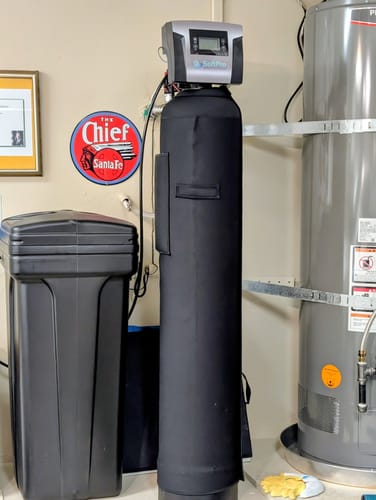
Once I committed to finding a whole-house solution, I quickly discovered that the water treatment industry is filled with conflicting information, aggressive sales tactics, and a bewildering array of technologies that aren't always well-explained to consumers. I spent weeks reading everything I could find about reverse osmosis systems, salt-based water softeners, salt-free conditioners, and various filtration technologies.
The first major decision point was understanding the difference between water softening and water filtration. Traditional water softeners address hardness minerals like calcium and magnesium through ion exchange, but they don't remove chlorine, fluoride, or many other contaminants. Reverse osmosis systems can remove an incredibly wide range of contaminants but require significant water waste and ongoing maintenance that seemed impractical for whole-house applications in our water-conscious desert environment.
That's when I discovered catalytic carbon filtration and the specific benefits of bone char carbon for fluoride removal. Unlike regular activated carbon, catalytic carbon is specially treated to enhance its ability to remove chloramines - the chlorine-ammonia compounds that many municipalities use because they're more stable than free chlorine. Bone char carbon, derived from animal bones through a specific pyrolysis process, has a unique affinity for fluoride compounds that regular carbon can't match.
The science behind these materials fascinated me, but more importantly, the real-world performance data looked promising for our specific water chemistry.
SoftPro's system combines both technologies in a single, upflow design that maximizes contact time while maintaining good flow rates throughout the house.
I evaluated systems from several manufacturers, comparing everything from media specifications to warranty coverage to local service availability. Price was certainly a factor - whole house systems represent a significant investment - but I focused primarily on finding the right technology match for our water conditions and household needs.
What ultimately sold me on the SoftPro system was the combination of proven filtration media, smart engineering design, and the company's focus on DIY-friendly installation and maintenance. The upflow configuration means the water moves through the media bed from bottom to top, which provides better filtration contact and extends media life compared to traditional downflow systems.
The sizing calculations were crucial to get right. Our household of four people, with typical daily water usage around 240 gallons, required careful consideration of both peak flow rates and total capacity. During morning routines when multiple fixtures might run simultaneously - shower, dishwasher, and bathroom sinks - the system needed to maintain adequate pressure while still providing effective filtration contact time.
Unboxing and First Impressions
When the SoftPro system arrived, I was immediately impressed by the packaging quality and attention to detail. The main tank arrived carefully secured in custom foam packaging, while the control valve and media came in separate, well-labeled containers. Everything felt substantial and well-manufactured - definitely not the lightweight, plasticky feel I'd experienced with some other water treatment products.
The fiberglass tank itself is larger than I anticipated, measuring 54 inches tall with a 13-inch diameter. While I'd carefully measured the installation space, seeing it in person reinforced the importance of planning adequate clearance for future maintenance access. The tank construction appeared robust, with thick walls and professional-grade fittings that suggested this was built for long-term residential use.
The Clack WS1 control valve earned immediate respect for its solid construction and clear labeling of all connections. Having researched control valve options extensively, I knew that Clack valves are considered among the most reliable in the industry, and handling the unit in person confirmed why. The programming display was intuitive, and the manual provided clear explanations without being overly technical.
What surprised me most was the comprehensive nature of the installation kit. SoftPro included bypass valves, pressure gauges, pipe fittings, and even the specialized gravel and media loading tools. Having tackled other home improvement projects where you discover missing components halfway through installation, this attention to completeness was refreshing.
The bone char carbon arrived in sealed bags with clear loading instructions and safety information. The catalytic carbon had a different appearance and texture than regular activated carbon I'd seen before, with a more uniform particle size and darker coloration that indicated the special treatment process it had undergone.
Installation Reality: Challenges and Solutions

I'll be honest - I initially planned to hire a plumber for the installation, but after reviewing the instructions and watching several online videos, I decided to tackle it myself with help from my neighbor who has more plumbing experience. This decision saved money but required a full weekend and taught me several lessons about residential water system installation.
The most challenging aspect was integrating the system into our existing plumbing configuration. Our water meter and main shutoff are located near the front of our property, but the ideal installation location for maintenance access was in our garage. This required running about 25 feet of new pipe and carefully planning the bypass valve placement for future service needs.
Installing the bypass valves correctly proved more critical than I initially understood. These valves allow you to isolate the filtration system for maintenance while maintaining water service to the house. Getting the valve orientation right and ensuring proper sealing required patience and several trips to the hardware store for additional fittings.
The media loading process was surprisingly straightforward once I understood the proper sequence.
The system requires a specific layering of gravel foundation, catalytic carbon, and bone char carbon, with each layer serving a distinct purpose in the filtration process. The instructions were detailed, but I appreciated having the specialized loading funnel that prevented media spillage and ensured even distribution.
Initial system startup revealed a few minor leaks at threaded connections that required tightening and re-sealing. This is apparently normal with new installations, but it reinforced the importance of pressure testing before considering the job complete. The system's initial flush cycle took about 20 minutes and produced noticeably dark water as the new carbon media released fine particles - completely normal according to the documentation.
Programming the control valve required understanding our household water usage patterns and local water conditions. The system uses time-based backwashing rather than metered regeneration, so setting appropriate intervals required some experimentation. I started with the manufacturer's recommended 7-day cycle and later adjusted to 5 days based on our actual usage and water quality observations.
Total installation time was about 12 hours over two days, including planning, pipe modifications, system mounting, media loading, and initial testing. A professional installer could probably complete the same work in 4-6 hours, but doing it myself provided valuable understanding of how the system operates and what maintenance tasks I'll need to perform long-term.
Performance Testing and Measurable Results
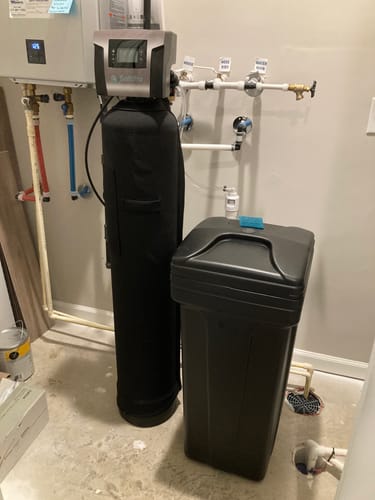
Within 48 hours of installation, the difference in our water quality was immediately noticeable. The most obvious change was the complete elimination of chlorine odor throughout the house. Previously, turning on any faucet produced that distinctive pool-like smell, especially first thing in the morning. Now, our water has no detectable odor even when running hot water that tends to release more volatile compounds.
I conducted systematic testing using both professional-grade test kits and simple consumer testing strips to document the system's performance across different parameters. Before installation, our free chlorine levels ranged from 2.5 to 4.2 parts per million depending on time of day and municipal treatment variations. Post-installation testing consistently shows zero detectable chlorine using DPD test reagents.
The fluoride removal performance required specialized testing since standard consumer test strips aren't accurate at the low concentrations we're measuring. Using a calibrated digital meter, I documented incoming fluoride levels around 0.9 parts per million - typical for our municipal supply. After filtration, levels dropped to approximately 0.15 parts per million, representing roughly 85% removal efficiency that aligns with bone char carbon specifications.
Perhaps most importantly, the taste improvement was dramatic and immediate.
Our morning coffee now tastes clean and bright, allowing the actual coffee flavors to come through without the underlying metallic notes we'd grown accustomed to. Even plain tap water became genuinely enjoyable to drink, eliminating our family's dependence on bottled water for daily hydration.
Total dissolved solids measurements dropped from our baseline 380 parts per million to approximately 320 parts per million. While not a dramatic reduction, this represents removal of specific dissolved compounds while maintaining beneficial minerals that contribute to taste and health. Unlike reverse osmosis systems that strip out nearly all dissolved minerals, the carbon filtration approach provides selective contaminant removal.
Flow rate testing throughout the house showed no noticeable pressure drop under normal usage conditions. Even during peak demand periods - simultaneous shower, dishwasher, and washing machine operation - water pressure remained adequate at all fixtures. The system's upflow design and proper sizing calculations proved effective for our household's requirements.
Over the first six months, I tracked the system's performance consistency and found remarkably stable results. Monthly testing showed no degradation in chlorine removal, and taste remained consistently improved. The only variation I noticed was slightly reduced fluoride removal efficiency after about four months, dropping from 85% to approximately 75% - still well within acceptable performance range.
Daily Life Impact: The Unexpected Benefits
While I expected improvements in drinking water quality, the broader household impacts surprised me with their significance. The most noticeable change was in our skin and hair health, particularly for my daughter who had been struggling with dryness and irritation. Within two weeks of installation, she commented that her skin felt less tight after showers, and the persistent itchiness around her hairline completely disappeared.
Our laundry results improved dramatically in ways I hadn't anticipated. Colors appear brighter and whites stay truly white longer, without the gradual graying that had become our normal. More surprisingly, our clothes feel softer even when using the same detergent, and we've been able to reduce fabric softener usage by about half while achieving better results.
The impact on our household appliances became apparent over several months of use. Our dishwasher, which had been leaving slight spots on glassware despite using rinse aid, now consistently produces spot-free dishes. The coffee maker's internal components stay cleaner longer, and I've extended the descaling interval from monthly to quarterly without any performance degradation.
Even our plants seemed to appreciate the improved water quality.
Our indoor plants, particularly the more sensitive varieties like peace lilies and ferns, showed noticeably improved growth and fewer brown leaf tips that typically indicate water quality stress. Our vegetable garden responded well during the growing season, though obviously multiple factors influence plant health.
Cooking with filtered water enhanced flavors in subtle but meaningful ways. Soups and stews taste cleaner, bread dough rises more consistently, and even ice cubes are crystal clear rather than the slightly cloudy appearance we'd accepted as normal. These might seem like minor details, but they add up to a generally improved quality of daily life.
Our family's water consumption patterns changed significantly once tap water became genuinely enjoyable to drink. We eliminated the monthly expense and environmental impact of bottled water purchases, while actually drinking more water throughout the day because it tastes good and is conveniently available from any faucet.
Guests consistently comment on our water quality, often asking what we've done differently. Several neighbors have asked detailed questions about the system after tasting our tap water, which speaks to how noticeable the improvement really is compared to standard municipal water in our area.
Operating Costs and Long-Term Value Analysis
Eighteen months of ownership has provided clear insight into the true operating costs of the SoftPro system beyond the initial investment. The most significant ongoing expense is media replacement, which SoftPro recommends every 3-5 years depending on water usage and local water conditions.
Based on our water chemistry and household usage patterns, I'm planning media replacement at the four-year mark. Current pricing for a complete media refill runs approximately $280, including both catalytic carbon and bone char carbon in the appropriate quantities. While not insignificant, this breaks down to about $70 annually or $5.80 monthly for media costs.
The system's backwash cycles consume approximately 85 gallons of water every five days, totaling about 6,200 gallons annually for regeneration. At our current water rates of $3.20 per thousand gallons, this represents roughly $20 yearly in additional water consumption. The backwash schedule is adjustable, but reducing frequency would compromise filtration performance.
Electrical consumption is minimal since the control valve only draws power during brief programming periods and valve cycling. My detailed energy monitoring shows less than $8 annually in electricity costs, making this essentially negligible in the overall operating expense calculation.
Comparing these costs to our previous bottled water purchases reveals significant savings.
We were spending approximately $45 monthly on bottled water for drinking, cooking, and coffee preparation. Annual savings of $540 easily offset the system's operating costs while providing superior convenience and environmental benefits.
The broader economic impact includes reduced cleaning product usage, extended appliance life, and decreased maintenance requirements for fixtures and plumbing components. While harder to quantify precisely, these secondary savings contribute meaningfully to the system's value proposition.
Calculating total cost of ownership over ten years, including initial investment, media replacements, and operating expenses, the per-gallon cost of treated water works out to approximately $0.08 per gallon. Compared to bottled water at $1.25-$2.00 per gallon, the economics strongly favor whole-house filtration for families committed to high-quality water.
Property value considerations also factor into long-term value analysis. Whole-house water treatment systems are increasingly viewed as desirable home improvements, particularly in areas with known water quality challenges. While difficult to quantify precisely, real estate professionals suggest that quality water treatment adds value for discerning buyers.
Maintenance Reality and System Reliability
After eighteen months of operation, the SoftPro system has required minimal hands-on maintenance while delivering consistent performance. The primary routine task involves monthly monitoring of system pressure and visual inspection of connections for any signs of wear or leakage.
The automated backwash cycles occur every five days as programmed, typically during early morning hours when household water demand is lowest. This process is completely automatic and produces no noticeable impact on household water pressure or availability. The only indication that backwashing has occurred is the brief sound of water movement and valve cycling.
I've performed two manual regeneration cycles when we've had periods of unusually high water usage, such as when hosting extended family visits. The manual override function is straightforward to activate through the control valve programming, and the process completes automatically once initiated.
The system's reliability has been impressive, with no component failures or unexpected issues requiring professional service.
The Clack control valve has operated flawlessly, maintaining accurate timing and executing regeneration cycles precisely as programmed. All plumbing connections remain secure, and the tank shows no signs of wear or degradation.
Monitoring filtration performance requires monthly testing for chlorine levels and periodic testing for other parameters like fluoride and TDS. This routine takes about 15 minutes monthly and provides confidence that the system continues operating at design specifications. I've established a simple log to track test results and identify any trends that might indicate maintenance needs.
The bypass valve system has proven invaluable during the two occasions when I needed to isolate the filtration system for inspection and testing. The valves operate smoothly and provide complete isolation while maintaining household water service - exactly as designed.
Seasonal variations in municipal water chemistry have had minimal impact on system performance. Summer months when chlorine levels tend to be higher show no breakthrough, and winter periods with different source water blending produce consistently filtered results.
Looking ahead, the next major maintenance task will be media replacement in approximately 2.5 years. SoftPro provides detailed instructions for this process, and the system design allows for straightforward media changeout without special tools or professional service. The initial installation experience gives me confidence that I can handle this maintenance independently.
Component warranty coverage provides additional peace of mind. The tank carries a 10-year warranty, while the control valve is covered for 5 years. SoftPro's customer support has been responsive during my few technical questions, providing knowledgeable assistance without high-pressure sales tactics.
Final Assessment: Investment Worth Making Again
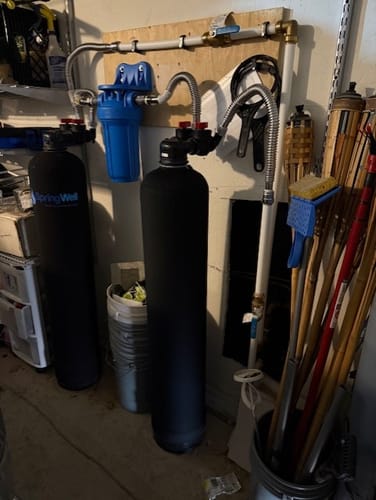
Eighteen months of real-world experience with the SoftPro Fluoride & Chlorine SUPER Filter has exceeded my expectations in most areas while meeting realistic performance standards in others. The Fluoride Filtration system delivers exactly what it promises: comprehensive removal of chlorine and chloramines, significant fluoride reduction, and overall water quality improvement that impacts every aspect of daily life.
The installation investment of $1,847 including all components and fittings represents significant upfront cost, but the long-term value proposition is compelling when you factor in operating savings, health benefits, and improved quality of life. For our family, eliminating bottled water purchases alone recovers a substantial portion of the annual ownership costs.
Would I make the same decision again? Absolutely, and probably sooner rather than waiting as long as I did to address our water quality concerns.
The daily benefits have become so integrated into our routine that it's hard to imagine returning to unfiltered municipal water.
The system isn't perfect - no residential water treatment solution addresses every possible concern or contaminant. The SoftPro filter doesn't soften water, so areas with severe hardness problems might need additional treatment. It doesn't remove dissolved minerals that contribute to TDS levels, which some families prefer to minimize. And it requires ongoing maintenance and eventual media replacement that represents real ongoing costs.
For households dealing with chlorine taste and odor, fluoride concerns, or general municipal water quality issues, this system provides an effective, reliable solution. The technology is proven, the engineering is sound, and the performance is consistent. Installation complexity is manageable for experienced DIY homeowners, though professional installation might be worthwhile for complex plumbing situations.
The peace of mind that comes from knowing exactly what's in your household water supply - and what's been removed - has value beyond the measurable performance metrics. Our family drinks more water, enjoys better-tasting food and beverages, and benefits from reduced exposure to water treatment chemicals throughout our daily routines.
If you're researching whole-house water filtration and your water chemistry matches what this system is designed to address, I can recommend the SoftPro system based on extensive real-world testing and reliable long-term performance. It's an investment that pays dividends every single day through improved water quality that you'll notice and appreciate for years to come.